My name is Clare and I am a children's bookseller. As part of my job I write book reviews, some get published and some never see the light of day. This blog collects together all my kids book reviews, everything from picture books to young adult novels. Many of these I've read as preview copies, but I won't publish the review here until after the book is published. (Spoilers, sweetie). You won't find any bad reviews here, these are all books I love.
Showing posts with label list. Show all posts
Wednesday, August 8, 2018
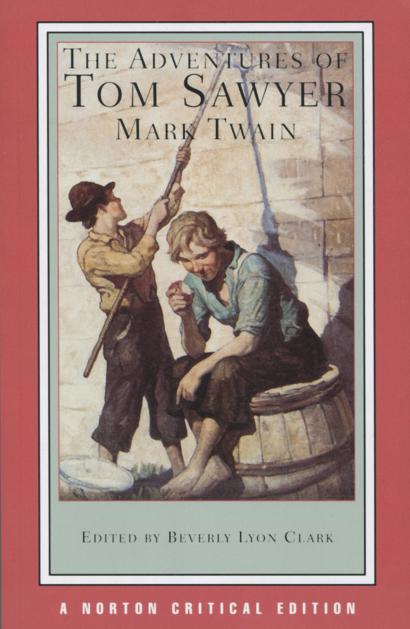
The Adventures of Tom Sawyer by Mark Twain
Book 9 of 100 in the Great American Read list
When I first came to America I thought there were probably a few books I could read that would catch me up on American Culture 101. I started with Leaves of Grass but found it pompous and self-important. Then I wandered around novels set in Five Points in the late 1800s, because sooner or later PT Barnum made an appearance and he seemed more American than Walt Whitman. Then I discovered Tall Tales, the folklore of America and I was deeply satisfied. Here was a whole genre of simple stories that proved my theory that all Americans are con-artists and tricksters who want to steal your time and take your money.
Needless to say, ten years later I've tempered that opinion somewhat. The more Americans I meet and the more states I visit I get a wider understanding of the American character and the diverse nature of the population. Now I would say that only most Americans are con-artists and tricksters who want to steal your time and take your money.
Which brings me (eventually) to The Adventures of Tom Sawyer a book about an idealized childhood that feels more like a series of Tall Tales plucked from the clean Missouri air. When Tom sells his classmates the privilege of whitewashing Aunt Polly’s fence, it reads like a morality tale, a fable or at least a story you’ve heard before.
The Adventures of Tom Sawyer is the story of a boy and his friends spending the summer getting into trouble and tricking the unwary. But there's also a darker story here. Tom witnesses a brutal murder, fears for his life, identifies a murderer at a trial, gets lost in a natural cave system with the killer for three days and finally sees him brought to natural justice by being sealed into the cave to starve to death. I read this book as a child and I didn't remember that it was a psychological thriller. I just remembered the funny bits.
And yes, it is funny. There were countless times I smiled while reading and when Twain breaks the fourth wall in order to draw a curtain over the consequences of Tom's failure to know any scripture I actually laughed out loud. Twain builds up the tension and then pops that balloon with a careless style. It's also a dashing adventure story, a sappy romance and a morality tale. Only in a Mark Twain book would a vagrant child turn down a fortune in gold because he doesn't want to wear shoes.
Why is it on the list? Other than the moral of the tale being that the wily and immoral will always prosper. There's also plenty here that venerates childhood and idealizes nature. Tom Sawyer is a soft focus version of the pick-pocket urchins of Charles Dickens. More beautifully atmospheric and less premeditated.
Another thing that stood out for me is the theme of superstition, some which Tom invents and some which he actually believes. He or his friends are scared of ghosts, witches, ha'nted houses, howling stray dogs and starting an enterprise on a Friday. There's a whole chapter about how a dead cat can cure warts if you say the right words over it. Of course, Twain's point here is not to venerate superstition, but to hold it up to ridicule, but he certainly has plenty of material to work with. I was reminded of the difference between Halloween in America, where it is a huge and excitable candy sprinkled festival of fear and Britain, where it is a gloomy night.
Mark Twain is a legend himself. A giant mustachioed epigram generator. A satirist for all time. A true American iconoclast. It's a wonder to me that this pillar of satire hasn't crumbled. After all, the book continues to be banned or challenged for it's racist language. And the presentation of Native Americans as desperate barbaric murderers is pretty uncomfortable reading. Perhaps there really is an American tendency to venerate the confidence trick. After all, there's a con-artist in the White House right now and he isn't the first.
Labels:
books,
great american read,
list,
mark twain,
pbs,
tom sawyer
Sunday, July 29, 2018
A Confederacy of Dunces by John Kennedy Toole
Book 7 of 100 from the Great American Read list.
"Oh, my God!"
This is the first of the books on the Great American Read list that I couldn't wait to get through. It was such a slog. Normally, when I read a book that I dislike this much, I stop reading and I don't review it. So this might get controversial.
A Confederacy of Dunces does not have a plot. Instead it meanders around New Orleans gathering descriptions of insanity, frustration and general uncomfortableness. Every sentence is as monstrous as the protagonist's stomach. The style is a deliberate choice, of course. If a sane reader is to have any empathy for Ignatius J Reilly we need to suffer through his torturous language and "world view" so that we can feel his impotence. But it’s hard going for me.
The awkward humor of watching a character go through a mental breakdown always makes me cringe. Unfortunately, the Brits are brilliant at this kind of humor. Alan Partridge, The Office and (worst of all) The Royle Family make me look away while everyone else is laughing. When Ignatius is attempting to get support for his "Campaign for Moorish Dignity" on the factory floor, he gets embarrassed and starts dancing. At least I know where David Brent came from now.
And yet, people apparently love this book. One of my colleagues told me that her boyfriend always has a copy of A Confederacy of Dunces with him. His copy is so well read that it's fallen in two halves. My American roommate from London who introduced me to my husband gave me her copy of this book when she left the UK. Thank god she has better taste in men than in books.
So why is it on the list? Well, rants are fun to read and even though I don’t think it’s funny, I know other people who would find it hilarious. But there are other more complex factors at play.
Ignatius has many ideas and most of them seem insane. His political ideologies are all over the road. I think if I had to pin down his “world view” I’d liken it to Kanye West in “Free Thinker” mode or Steve Bannon's "burn it down" philosophy. The fact that I can find parallels with Ignatius J Reilly in America today may seem remarkable, but I think it’s part of the appeal of the book. We all know an Ignatius J Reilly, I think one might currently be president.
Having said that, I don’t think any of us is totally free of extreme ideas. I think we can all find something in Ignatius’ ramblings, which we might be persuaded to believe, given the right encouragement.
I have noticed that belief is often confused with truth, as I saw in a Facebook comment a few weeks ago “don’t argue with a liberal, they just ask you to prove it”. And Americans love to believe, especially in themselves. But not everyone’s beliefs can be true. Just as not all of Ignatius’ legion of beliefs can be true. So like any good satirist the author turns up the volume on our ideas and shows us how absurd they are.
I’d like to finish up with a few thoughts about the women in this book. There are no sympathetic female character here. There are some male characters that we warm to, Burma Jones was a favorite of mine and the long-suffering but fair-minded Gus Levy seemed to be the most sensible character in the book. But the women are just charicatures.
Almost all the disasters that befall Ignatius in A Confederacy of Dunces could easily be attributed to the women in his life. His mother spoils him, his girlfriend provokes him, the woman he believes will be the love of his life is not what he expects and even the women of the choir at the factory undermine his authority. Ignatius believes that he has no agency, he is tossed from one misadventure to another by the capricious turns of Fortuna’s wheel. But all these women, including Fortuna, are not responsible for Ignatius’ mistakes. He is. I walked away with the uncomfortable feeling that Ignatius might now be described as an incel.
But uncomfortableness is the point of satire and it’s definitely the point of A Confederacy of Dunces. Maybe I should have written a one word review.
Awkward.
Subscribe to:
Posts (Atom)

